CYCLING ROUTE · FLEVOLAND
Cycling Route Noordoostpolder and UNESCO World Heritage Schokland
Cycle through the open landscape of the Noordoostpolder, with straight polder roads, wide fields, canals and dikes, and discover the unique former island of Schokland, a UNESCO World Heritage Site.
The Landscape
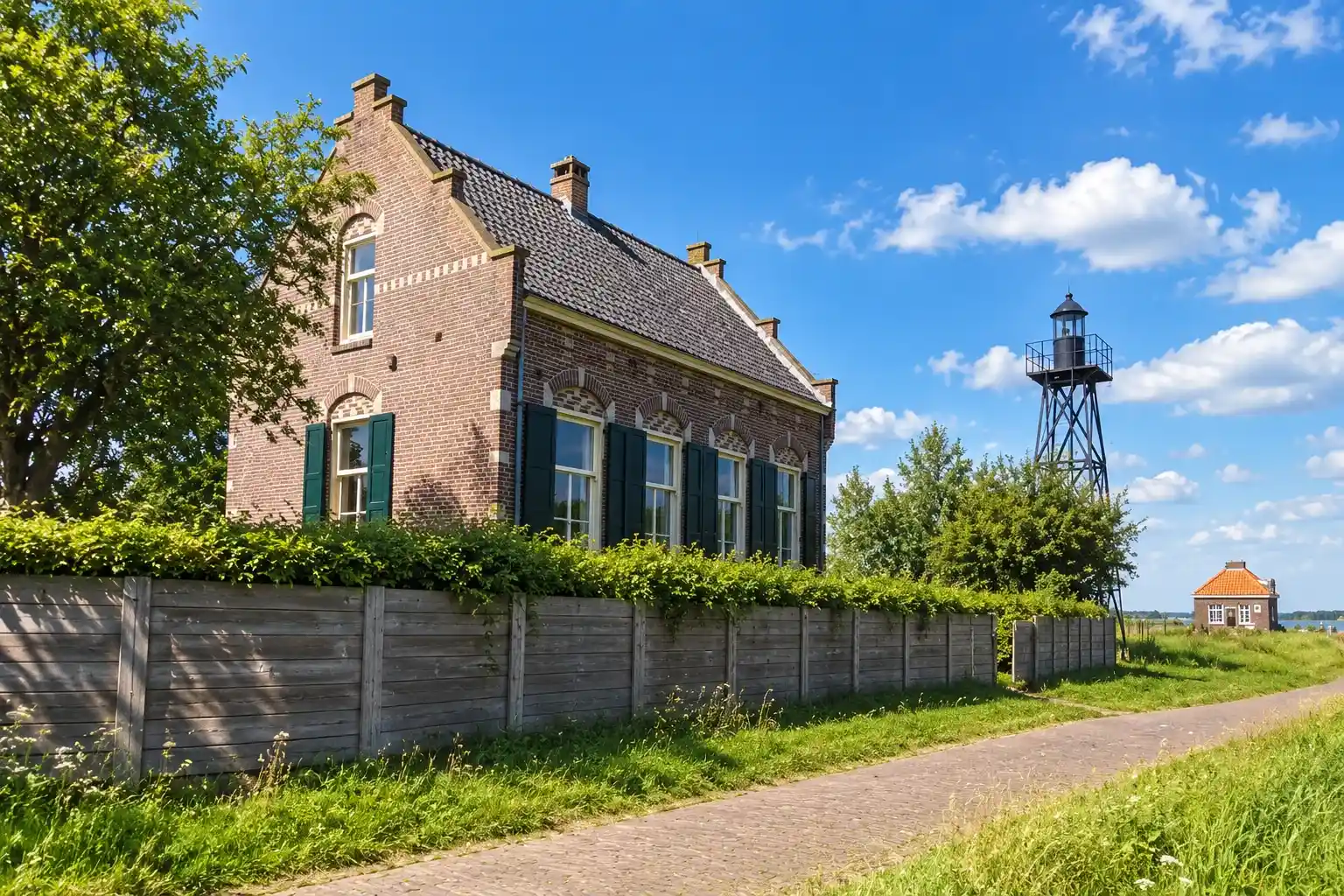
The Noordoostpolder is a textbook example of Dutch engineered landscape. After the former Zuiderzee was reclaimed, the new land was laid out according to a clear plan, with straight drainage canals, perfectly aligned roads and a logical network of villages. This orderly structure is softened by colorful fields, farmstead plantings and green woodland strips that provide shelter in the open polder landscape.
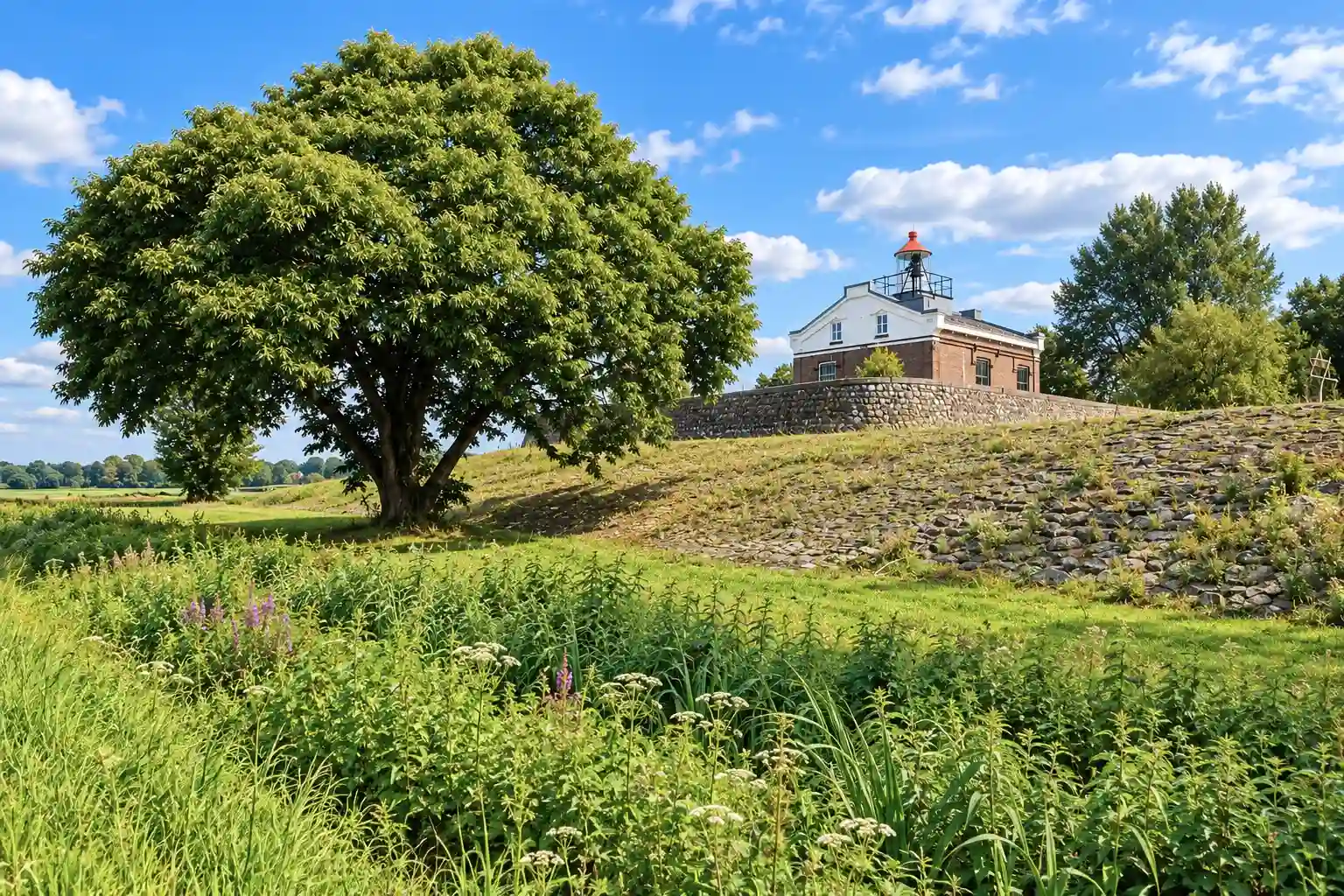
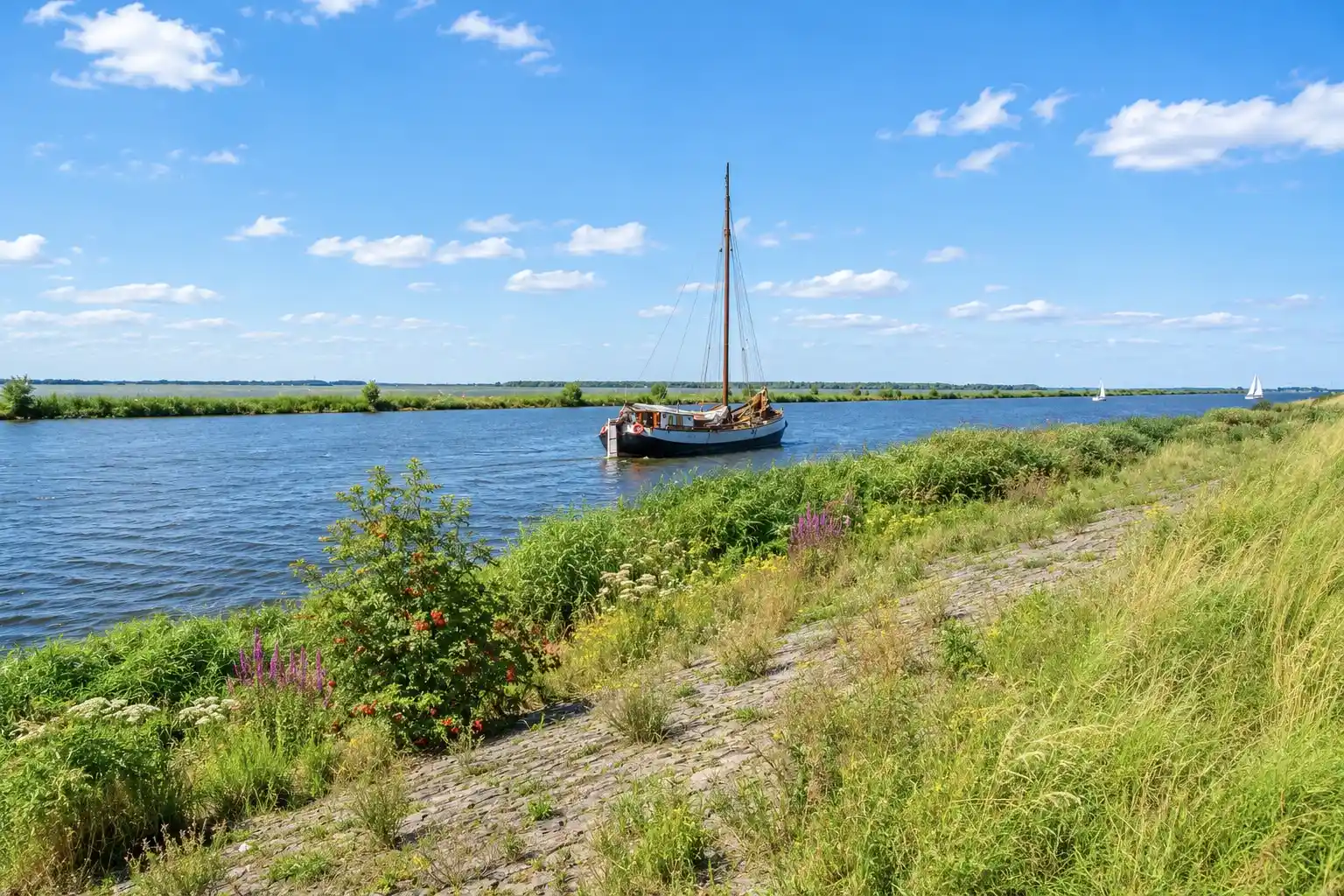
At the heart of this young land lies Schokland, a former island in the Zuiderzee and now a UNESCO World Heritage Site. Its history of living with water remains visible in remnants of dikes, raised grounds and traces in the soil. Along the edges of the Noordoostpolder, the Ketelmeer and Zwarte Meer add open water, reed beds and wide views, creating a striking contrast between land and water.
What You'll Discover Along the Way

Forests and Heaths
Between Nagele and Kraggenburg, woodland edges and broad green belts provide shelter and a green contrast to the open polder landscape.

Estates and Heritage
Schokland reveals the history of life with water, with remnants of old dikes, raised grounds and historic sites recalling its past as an island.

Polders and Farmlands
Long straight roads, drainage canals, colorful fields and farmsteads create the spacious and carefully planned landscape of the Noordoostpolder.

Lakes and Wetlands
The Ketelmeer and Zwarte Meer bring open water, reed beds, wide panoramas and abundant waterbirds to the edges of the polder.
Virtual Cycling Through the Noordoostpolder and Schokland
Experience the Noordoostpolder from home, with straight roads, open fields, waterways, orchards and green woodland belts. Around Schokland, historic landscapes, reed-lined lakes and wide views add variety to this virtual cycling experience.
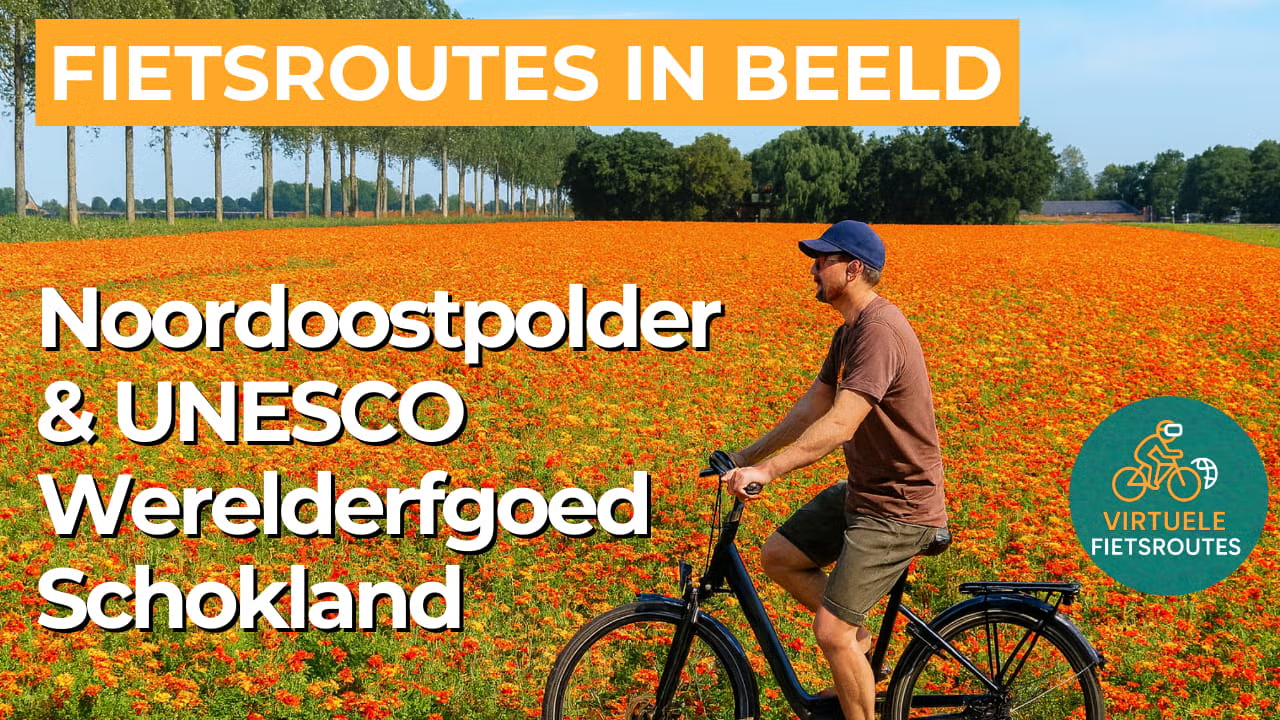
Experience the route from home with virtual cycling.
Route Map and Cycling Junctions
Start and finish at cycling junction 61 on the Schokkerringweg in Schokland. Because this is a circular route, you can also start at one of the other cycling junctions along the route.
Route Details
Along the way: several options for a coffee break or lunch.
Discover More Cycling Routes
Explore more Flevoland landscapes and find your next cycling adventure in nature.
EXPLORE ALL CYCLING ROUTES IN FLEVOLAND →