CYCLING ROUTE · SOUTH HOLLAND
Cycling Route Alblasserwaard and UNESCO World Heritage Kinderdijk
Cycle through a centuries old polder landscape of ditches, canals, river dunes, and pollard willows, with the iconic windmills of Kinderdijk.
The Landscape
The Alblasserwaard is an open peat and pasture landscape where dikes, drainage ditches and canals have shaped the scenery for centuries. Between the Lek, Merwede and Noord rivers, long, narrow fields, meadows and villages built on the higher dikes reflect the close relationship between water management and land use.
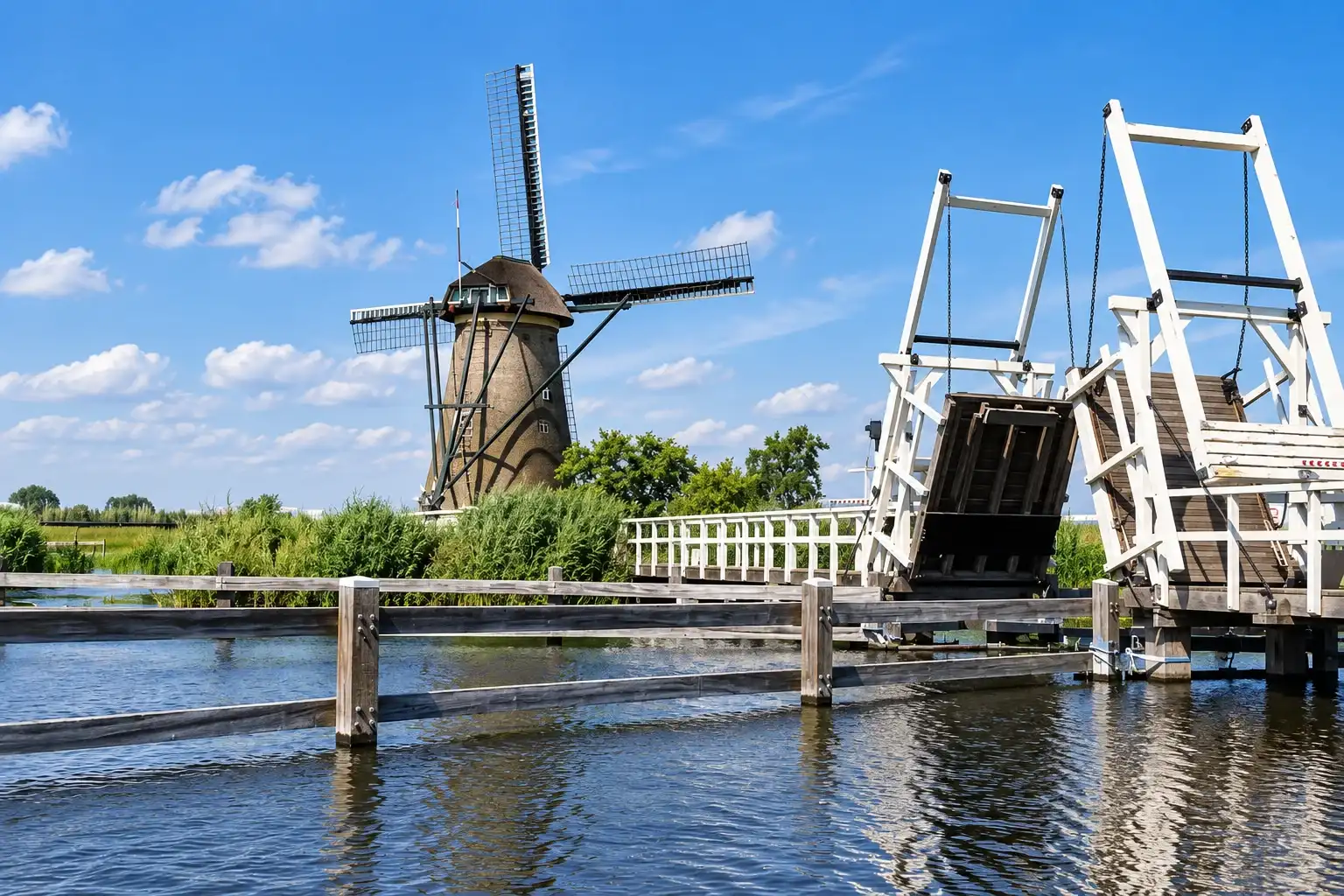
Kinderdijk is the best known landmark of this polder landscape. Historic windmills, reservoirs, mill canals and dikes illustrate the centuries old water management system that continues to shape the region today. Thanks to this unique ensemble, Kinderdijk has been designated a UNESCO World Heritage Site.
What You’ll Discover Along the Way

Estates and Heritage
Around Kinderdijk, windmills, embankments and drainage basins have regulated the water levels of the Alblasserwaard for centuries. Historic dike ribbons, farmhouses and hydraulic structures make the landscape a living example of Dutch water management.

Polders and Farmlands
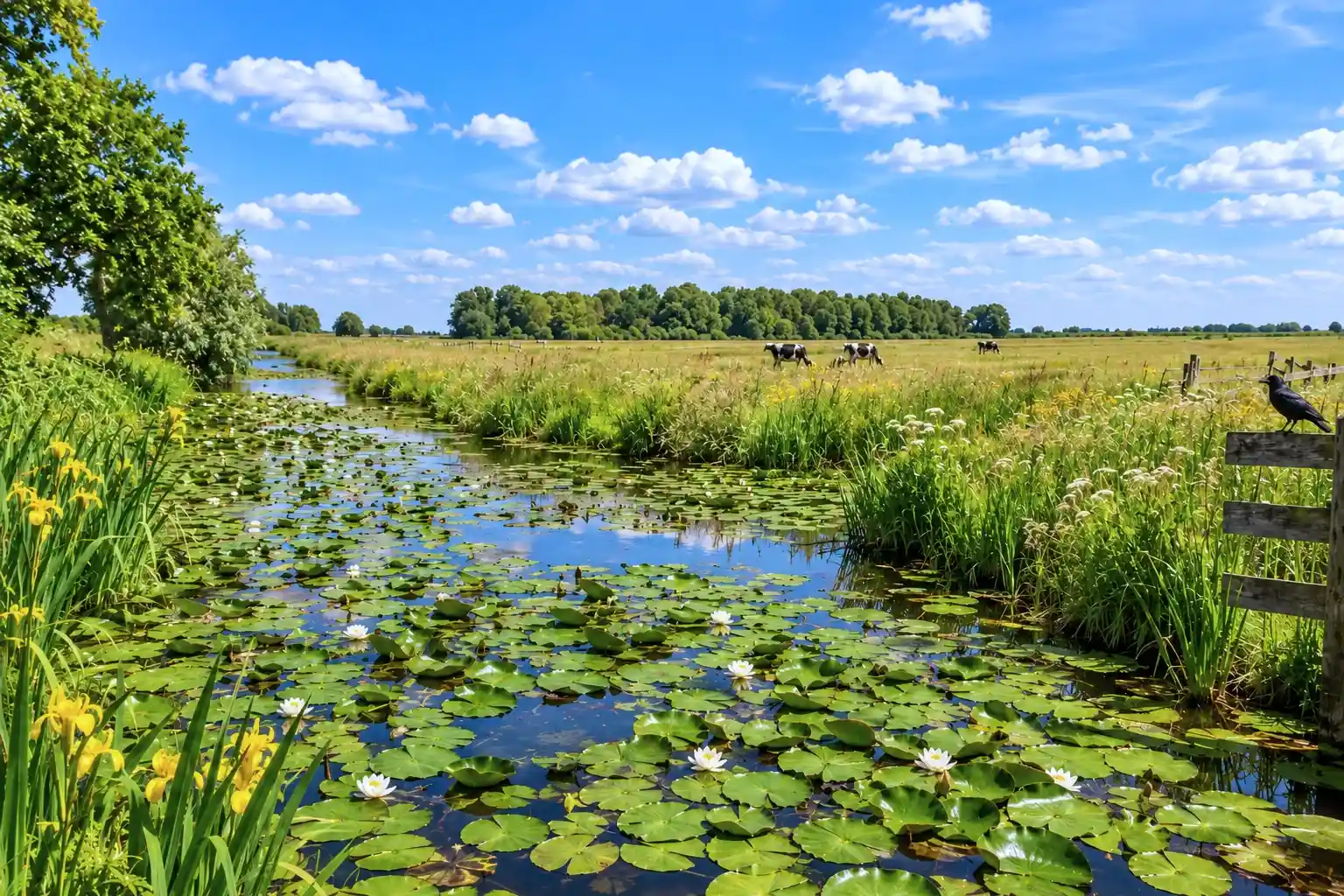
The polders lie behind low dikes, with long narrow fields, shimmering ditches and grasslands filled with cows and pollard willows. Narrow roads and dikes guide you through a peaceful landscape of open skies and wide views.

Marshes and Peatlands
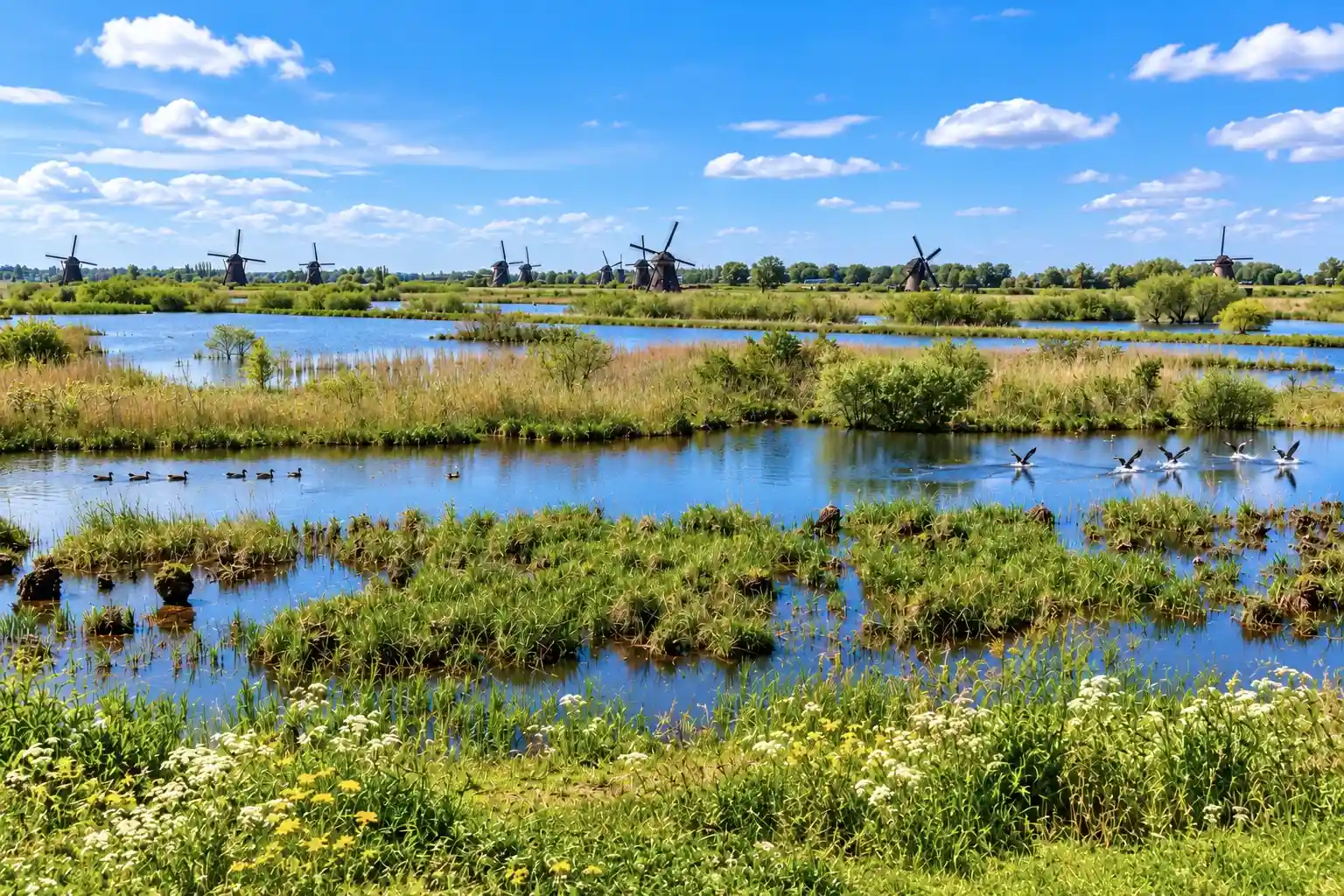
Behind the dikes, wet grasslands, reed fringes and soft banks reveal the underlying peat landscape. In areas such as the Donkse Laagten, water lies close to the surface, creating quiet wetlands that attract birds and other wildlife.

Rivers and Streams
The Lek, Merwede and Noord form the broad river edges of the Alblasserwaard, while the Alblas and Giessen create a fine network of smaller waterways. Dikes, floodplains and open skies alternate with intimate polder waters.
Virtual Cycling in the Alblasserwaard and the UNESCO World Heritage Site of Kinderdijk
Experience the Alblasserwaard with its peat meadows, drainage ditches, dikes, and expansive polder landscapes. The route passes through the UNESCO World Heritage Site of Kinderdijk, with its historic windmills, showcasing the unique relationship between water management, the cultural landscape, and the Dutch polder system.
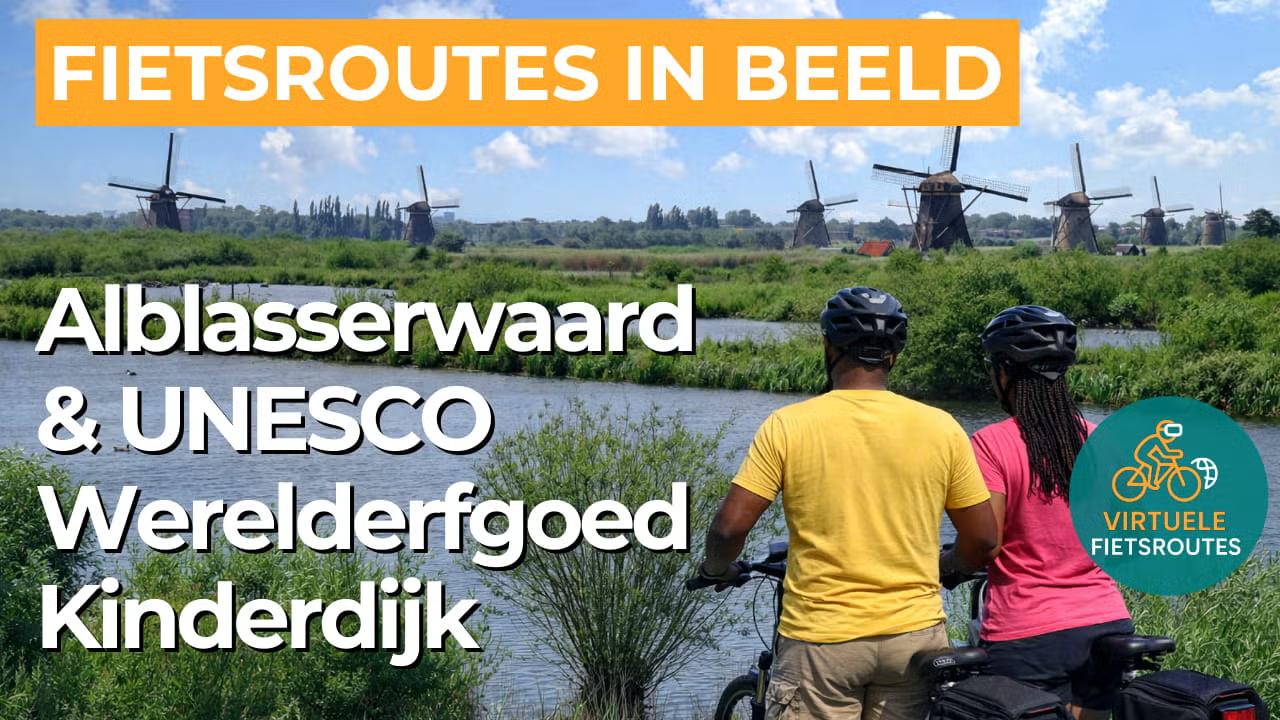
Experience the route from home with virtual cycling.
Route Map and Cycling Junctions
Start and finish near cycling junction 10 on the Peilkade in Papendrecht. Because this is a circular route, you can also start at one of the other cycling junctions along the route.
Route Details
Along the way: several options for a coffee break or lunch.
Discover More Cycling Routes
Explore more South Holland landscapes and find your next cycling adventure in nature.
EXPLORE ALL CYCLING ROUTES IN SOUTH HOLLAND →