CYCLING ROUTE · ZEELAND
Cycling route Western Scheldt, Braakman and Asseneedse Kreken
Cycle through a peaceful polder landscape with salt marshes and mudflats, woodlands and scrub, centuries old tidal creek remnants and idyllic mussel villages.
The Landscape
The Western Scheldt is one of Europe's largest estuaries, where the tides constantly reshape the landscape and the water gradually changes from fresh to salt. At low tide, vast sandbanks, mudflats and salt marshes emerge, together forming a rich habitat for plants, fish and birds. This continuous tidal movement creates a dynamic landscape filled with openness, light and motion.
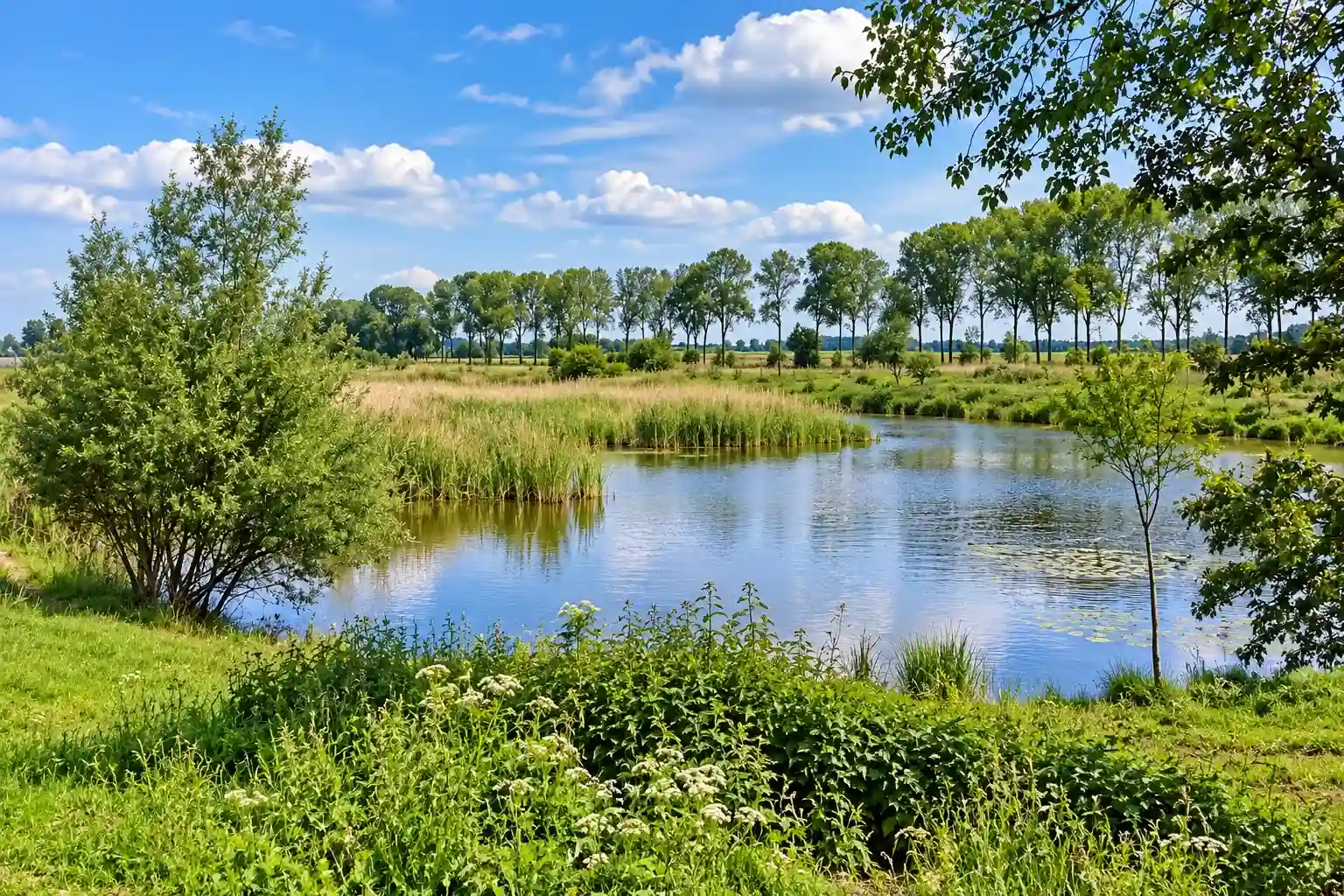
The Braakman was once a sea inlet near Terneuzen, with wetlands and tidal creeks shaping the landscape. Today, its waters, mudflats and salt marshes provide an important habitat for birds. Nearby, the Asseneedse Kreken form a network of tidal creeks with wet grasslands, reed beds, swamp forests and pollard willows, creating a peaceful and distinctive landscape.
What You'll Discover Along the Way

Forests and Heaths
In the Braakman area, sheltered woodland strips combine coniferous and deciduous forest with light open clearings, reed fringes and small creeks, creating an intimate and varied landscape.

Coastal and Tidal Zone
Along the Western Scheldt dike, wide views open across tidal waters, mudflats and salt marshes, with large seagoing ships crossing the horizon and the tides constantly reshaping the shoreline.

Polders and Farmlands
Neatly divided fields, dike ribbons and long straight roads create the typical Zeeland polder landscape, with farmlands, farmhouses and waterways stretching towards the horizon.

Lakes and Wetlands
The Braakman and Asseneedse Kreken add water rich variety with old channels, lakes, reed fringes and wet grasslands, where water birds and reflective surfaces create a peaceful natural atmosphere.
Virtual Cycling Through the Western Scheldt, Braakman and Asseneedse Kreken
Experience the Western Scheldt with its wide tidal waters, mudflats and salt marshes, then continue through the peaceful landscapes of the Braakman and Asseneedse Kreken. Along the way, reed beds, wet grasslands, swamp forests and quiet polder roads create a varied virtual cycling experience.
Experience the route from home with virtual cycling.
Route Map and Cycling Junctions
Start and finish at cycling junction 28 on the Inlaag in Hoofdplaat. Because this is a circular route, you can also start at one of the other cycling junctions along the route.
Route Details
Along the way: several options for a coffee break or lunch.
Discover More Cycling Routes
Explore more Zeeland landscapes and find your next cycling adventure in nature.
EXPLORE ALL CYCLING ROUTES IN ZEELAND →