CYCLING ROUTE · OVERIJSSEL
Cycling Route Northeast Twente and Springendal
Cycle through a green and small scale Twente landscape with hedgerows, Saxon farmhouses, forests and heathlands, where open meadows and stream valleys alternate with clear springs and gently flowing brooks.
The Landscape
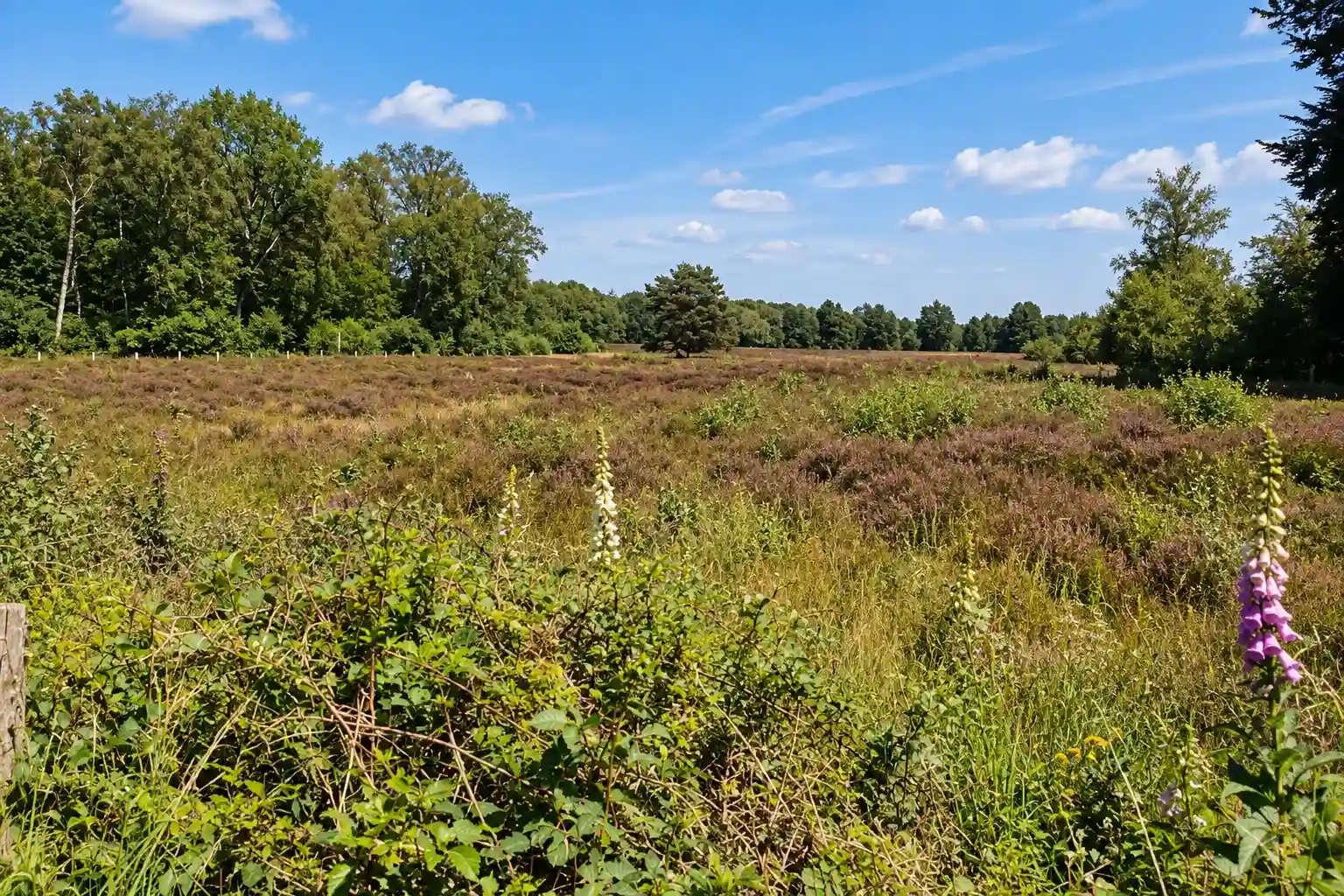
Northeast Twente is known for its traditional elevated field and enclosed farmland landscape around villages and hamlets, where fields and meadows are divided into small scale parcels. Hedgerows, tree lines, and small woodlands continually reveal new views, while heath patches and quiet fens create openness and sweeping vistas.
The elevation differences of the ancient pushed up grounds give rise to natural springs that feed the area with clear groundwater, after which small brooks slowly flow into the valleys. Hidden within the greenery are traces of a long history of settlement, from burial mounds and urn fields to historic farmyards with characteristic Saxon farmhouses. The Springendal forms a remarkably varied part of the route, where spring fed ponds, brooks, hay meadows, and ancient woodland plots lie close together.
What You'll Discover Along the Way

Forests and Heaths
Quiet forest edges and green avenues alternate with heathlands and open fields such as the Manderheide, creating a varied landscape of sheltered stretches and wide views.

Estates and Heritage
Springendal has the character of a country estate, with long avenues, water features and an English landscape style design, while historic watermills and Saxon farmhouses add to its heritage.

Polders and Farmlands
Elevated fields, meadows, farmyards and enclosed farmland surround the villages, with hedgerows and tree lines dividing the land into small green chambers.

Rivers and Streams
Natural springs feed ponds and small brooks that wind through the Springendal and Mosbeek valley, with wet hay meadows and green stream corridors keeping the landscape fresh and lively.
Virtual Cycling Through Northeast Twente and Springendal
Experience Northeast Twente from home, with elevated fields, enclosed farmlands, hedgerows and characteristic Saxon farmhouses. The route continues through the Springendal and Mosbeek valley, where natural springs, small brooks, hay meadows and green stream corridors create a varied and peaceful virtual cycling experience.
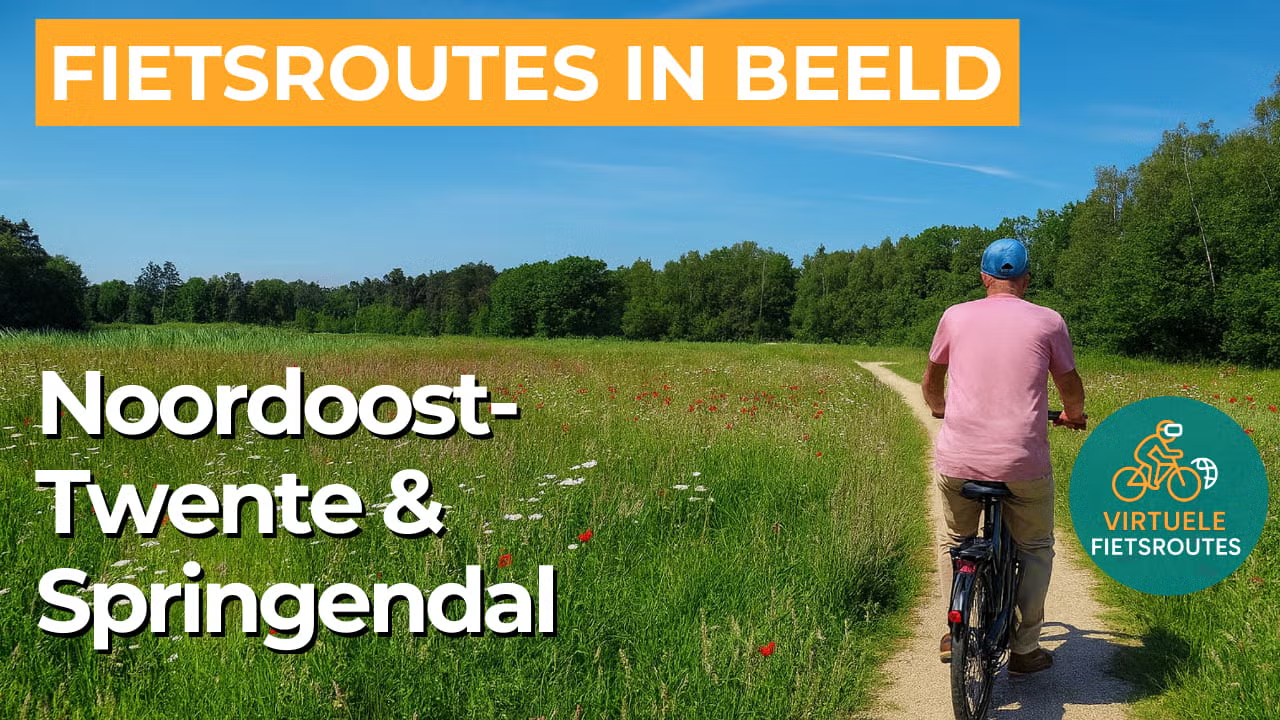
Experience the route from home with virtual cycling.
Route Map and Cycling Junctions
Start and finish near cycling junction 32 on the Bergweg in Mander. Because this is a circular route, you can also start at one of the other cycling junctions along the route.
Route Details
Along the way: several options for a coffee break or lunch.
Discover More Cycling Routes
Explore more Overijssel landscapes and find your next cycling adventure in nature.
EXPLORE ALL CYCLING ROUTES IN OVERIJSSEL →